
HRT Patches vs Gel vs Spray: Choosing Your Oestrogen
Deciding to start HRT can feel like a big step, and then you're handed another question: patch, gel or spray? If you've ever stood in front of a list of brand names and dosages feeling overwhelmed, please know that this is completely normal.
The good news is that there's rarely a wrong choice. Patches, gels and sprays all deliver oestrogen through the skin, and they share the same important safety advantages. The real question is which one fits your body and your daily life. Let's walk through it together.
Transdermal HRT explained
"Transdermal" simply means "through the skin". Patches, gels and sprays all release oestradiol, the body-identical form of oestrogen, which is absorbed through the skin straight into your bloodstream.
This matters because of what happens to oestrogen taken as a tablet. Oral oestrogen is absorbed through your gut and passes through your liver first, which can increase the production of clotting factors. That is why oral HRT is linked with a small increase in the risk of blood clots (venous thromboembolism).
Transdermal oestrogen bypasses the liver. At standard doses, research suggests it does not carry the same increased clot risk, and it is the option NICE guidance advises considering for women who have a higher baseline risk, for example those with a higher BMI or a personal or family history of clots. For many women, this is a real source of reassurance.
One important point: if you still have your womb, you'll also need a progestogen alongside any oestrogen to protect the womb lining. This can be micronised progesterone (such as Utrogestan), a combined patch, or a hormonal coil. We'll always discuss this with you.

HRT patches: pros, cons and how to use
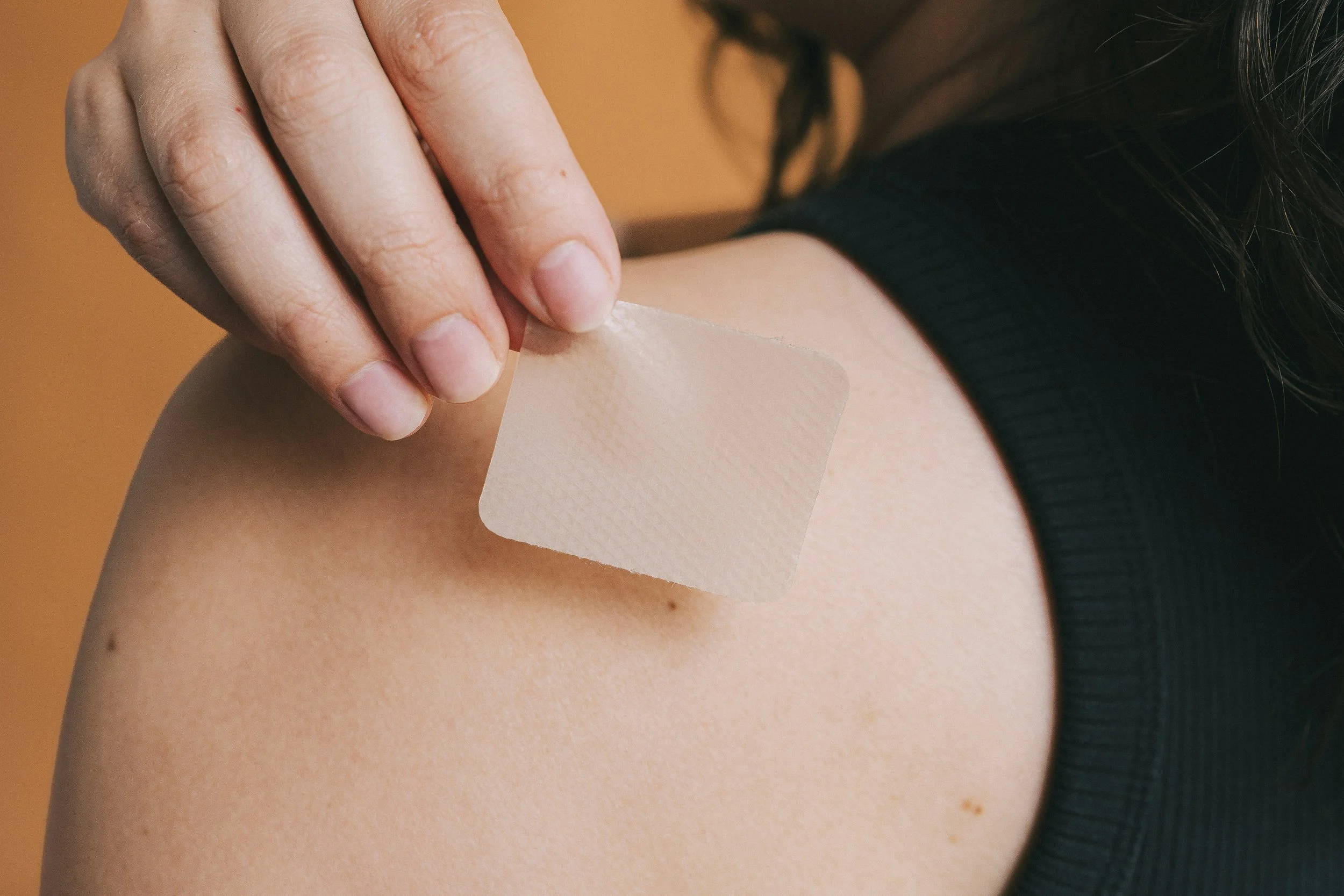
Patches are small, clear, sticky squares that release a steady amount of oestradiol over several days. Most are changed twice a week, and some once a week.
Pros
Very steady hormone levels, with no daily routine to remember
Ideal if you'd rather not think about HRT every morning
Combined oestrogen and progestogen patches are available
Available in a wide range of doses, so fine-tuning is straightforward
Cons
Some women develop skin irritation or redness
They can peel off with swimming, sweating or heat
Some people find them visible or bothersome
Adhesive marks can be an annoyance
How to use them
Apply to clean, dry, unbroken skin on the lower abdomen or buttocks.
Avoid the breasts, the waistband area, and skin that's oily or freshly moisturised.
Press firmly for around 30 seconds.
Rotate the site each time, and avoid using the same patch spot again for a week or so.
If one falls off, you can usually reapply it or put on a new one, then continue with your usual change day.
HRT gel: pros and cons
Gels such as Oestrogel and Sandrena are rubbed onto the skin once a day and allowed to dry. Oestrogel comes in a pump (each pump delivers a measured dose), while Sandrena comes in individual sachets.
Pros
Easy to adjust the dose, sometimes by a single pump
Nothing visible on the skin, and no adhesive
Good if patches irritate your skin or won't stay on
Quick to absorb, and you can apply after a shower
Cons
It must be applied daily
Absorption can vary from person to person, and between areas of skin
It can transfer to partners or children if they touch the area before it's dry
Some women find it a little fiddly or dislike the feel
How to use it
Apply to clean, dry skin on the arms, shoulders or inner thighs, avoiding the breasts and face. Let it dry fully (usually a few minutes) before dressing, wash your hands afterwards, and avoid washing the area for about an hour. If you're using sun cream, apply it away from the gel site.
HRT spray: Lenzetto
Lenzetto is a metered oestradiol spray, applied to the forearm. It's one of the newer transdermal options and suits women who find gels messy or patches troublesome.
Pros
Quick and clean, with no rubbing in
Dries in around two minutes
Simple dose control, with one to three sprays a day
Cons
The dose range is narrower, so it may not suit those needing higher doses
It is alcohol-based, so keep it away from flames or lit cigarettes until it has dried
Like gel, it can transfer to others through skin contact
It needs a daily routine
Use it on clean, dry skin on the inner forearm, let it dry, and avoid washing the area for around an hour.
How dose compares across patch, gel and spray
Doses are measured differently for each product, which is why comparisons can feel confusing. The table below is an approximate guide only. Everyone absorbs oestrogen differently, so the dose that works for you may not match a chart.
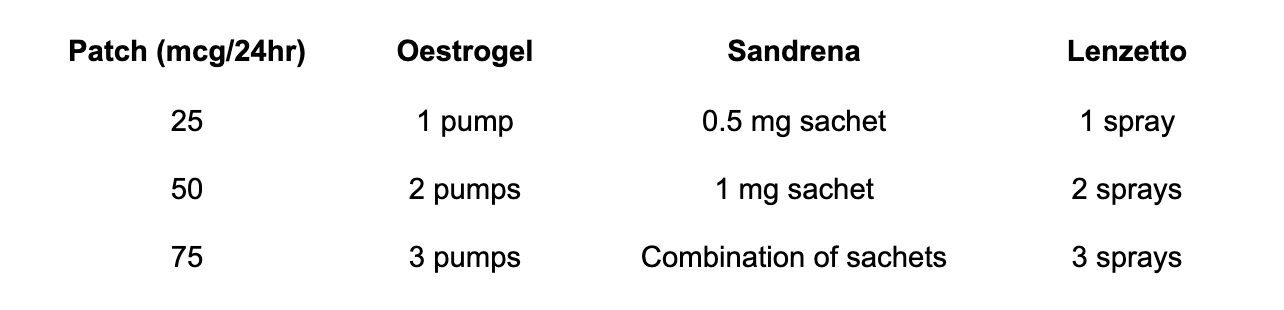
Higher doses are sometimes used with gel or patches, guided by your symptoms and a clinician's advice. Please don't adjust or swap your dose on your own. Symptom relief, not a number on a chart, is what tells us the dose is right.
Which is right for you, and how we tailor it
There is no single "best" oestrogen. The right choice depends on you:
Your skin. If you're prone to eczema or irritation, gel or spray may be kinder than adhesive.
Your lifestyle. Busy and forgetful? A patch might be easier. Swimming or exercising a lot? Gel or spray may stay put better.
Your routine. Some women love the daily ritual of gel, while others want to forget about HRT for days at a time.
Your health history. Your personal and family history, blood pressure, BMI, and whether you have a womb will all guide the safest and most suitable option.
Your preferences. Your comfort matters. If you dislike your method, you're less likely to stick with it.
At Wimbledon Medical Service, we begin by listening to your symptoms and your worries. We then explain the options in plain language, choose a starting dose, and plan a review, usually after about three months, because finding the right HRT often takes a little fine-tuning. If something isn't working, we change it. You are never stuck.
If you want to explore which option is best for you, please book a consultation here or write to reception@wimbledonmedicalservice.com for any question.
Frequently asked questions
-
Neither is better overall. Both are transdermal, and both carry the same advantage of not raising clot risk at standard doses. Patches offer steady release and less daily effort, while gel offers easier dose adjustment and nothing visible on the skin. The best one is the one you're comfortable using consistently.
-
For clot risk, yes. Transdermal oestrogen, including gel, doesn't appear to increase the risk of blood clots at standard doses, whereas oral oestrogen carries a small increase. Research also suggests a lower stroke risk with transdermal HRT. That said, your overall risk depends on your personal circumstances, so we always consider the full picture with you.
-
Typically, you remove your patch and start the gel on the day your next patch would have been due, using an equivalent dose. Some women notice mild changes as their body adjusts, so we usually check in after a few weeks. Please speak to a clinician before switching, particularly as you may need your progestogen arranged separately.
-
As a rough guide, a 50 mcg patch is comparable to two pumps of Oestrogel or a 1 mg Sandrena sachet, and a 25 mcg patch to about one pump. Absorption varies between individuals, so we always tailor your dose to how you feel rather than relying on a chart alone.
A final word
Choosing your oestrogen doesn't have to feel like a test you can fail. Whichever route you take, the aim is the same: to help you feel like yourself again, with your sleep, mood, energy and confidence restored. If you'd like help finding the right fit, we're here to guide you every step of the way.
This article is for general educational purposes and does not replace personalised medical advice. If you want to explore which option is best for you, please book a consultation here or write to reception@wimbledonmedicalservice.com for any question.